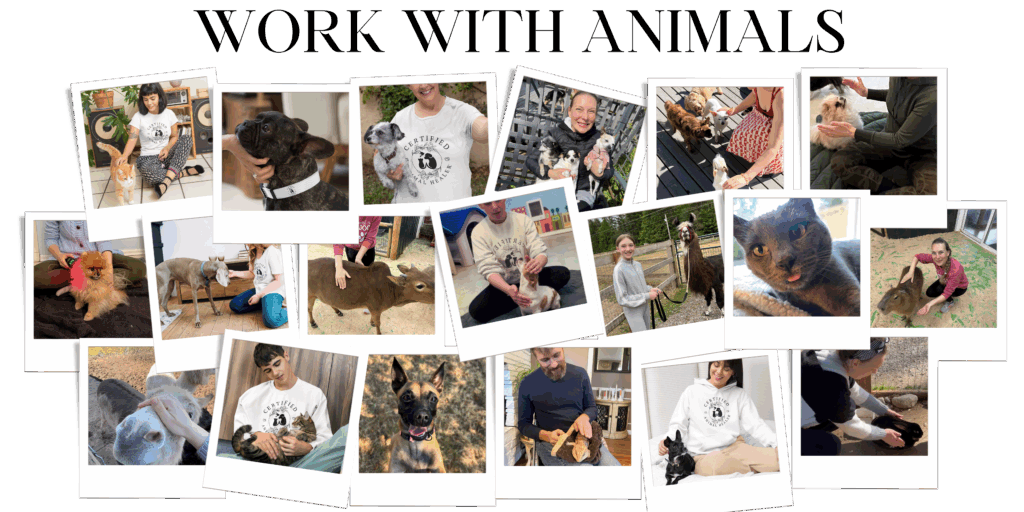
Hi, I am Sasha and I have been working with animals professionally since 2007.
Aromatherapy can be a beautiful addition to an energy healing session. Our sense of smell is closely connected to memory, emotion, and our overall experience of a space, so the right scent can help create an environment that feels calm, peaceful, grounded, or uplifting.
When I use essential oils in a healing practice, I don’t think of them as something that needs to be complicated. They are simply another tool that can support the atmosphere and experience of the session.
The most important place to begin is safety.
Essential oils are highly concentrated plant extracts. Natural does not automatically mean harmless, and more is not better. Oils should be used appropriately, stored safely, and selected according to the individual circumstances of the person receiving the session.
Before using aromatherapy with a client, I recommend asking about allergies, sensitivities, asthma or respiratory concerns, pregnancy, medications, and any other circumstances that could make fragrance uncomfortable or inappropriate. Give clients the opportunity to decline aromatherapy altogether.
Consent is important.
You can create a beautiful healing environment without using essential oils at all.
Creating the Healing Environment
If your client is comfortable with aromatherapy, you can begin by considering what you want the room to feel like.
Do you want it to feel peaceful and relaxing?
Grounded and earthy?
Fresh and uplifting?
Warm and comforting?
Rather than choosing an oil simply because you like its smell, think about the experience you are trying to create.
For example, lavender is commonly associated with relaxation and a peaceful atmosphere. Citrus scents such as sweet orange can create a bright and uplifting environment. Frankincense has a long history of use in spiritual and contemplative practices and may be appealing when creating a quiet, meditative setting.
These associations are not guarantees of a particular physical or emotional effect. People respond to scents differently, and personal memories can influence how an aroma is experienced.
That is why I like to make the client part of the process.
You might offer two or three appropriate options and ask which scent feels most comfortable to them.
Diffusion
One of the simplest ways to incorporate essential oils into a session is through diffusion.
A diffuser can gently distribute a small amount of essential oil throughout the room. If you use this approach, keep the concentration conservative and make sure the room has appropriate ventilation.
You can also diffuse the oil before the client arrives and turn the diffuser off before or during the session if the scent is strong enough to remain in the room.
Remember that your goal is not to make the room smell like a spa.
A subtle scent is often enough.
Personal Inhalation
Another option is to allow the client to experience an aroma directly without applying it to their body.
For example, an appropriate diluted aromatic product or inhalation method can be offered so the client can decide whether they enjoy the scent.
This gives the client more control than automatically filling the entire room with fragrance.
Incorporating Aromatherapy Into Energy Work
Aromatherapy can also become part of your session ritual.
Perhaps you begin each session with a few quiet breaths while the client notices the scent around them. You might invite them to set an intention for the session.
The essential oil itself doesn’t have to “do” anything.
It can simply become an anchor.
The client smells the aroma, settles into the room, closes their eyes, and begins transitioning away from the distractions of the day.
From there, you can move into Reiki, meditation, breathwork, intuitive healing, sound, or whatever modalities are appropriate for your practice.
This is where I think aromatherapy can be especially lovely.
It helps create a transition between ordinary daily life and intentional healing time.
What About Applying Oils to the Skin?
This is an area where extra caution is needed.
Essential oils should generally not be applied directly to the skin without appropriate dilution and knowledge of safe topical use. Some oils can cause skin irritation or photosensitivity, and certain oils may not be appropriate for particular individuals.
If topical aromatherapy is part of your practice, learn proper dilution methods and understand the safety information for every oil you use.
Never assume that because an oil is safe to diffuse, it is automatically safe to apply to the skin.
And never put essential oils into someone’s eyes, ears, nose, or other sensitive areas.
Aromatherapy and Animals
When working with animals, I become even more conservative.
Animals can respond very differently to essential oils than humans do. Their size, species, respiratory system, health conditions, and ability to leave an environment all matter.
I do not recommend simply diffusing an essential oil around an animal because it smells pleasant to us.
If you work with animals, learn species-specific essential-oil safety and consult an appropriately qualified veterinarian when there are health concerns. Make sure the animal can move away from the scent and never force an animal to participate.
Sometimes the safest aromatherapy session for an animal is one where the oil is used only in the surrounding environment, or not used at all.
The animal’s behavior should always be your guide.
The Healing Space Is About the Whole Experience
A healing session is made up of many small details.
The lighting.
The temperature.
The sound.
Your voice.
Your presence.
The comfort of the chair or table.
The client’s sense of safety.
And sometimes, a gentle natural aroma.
Essential oils don’t have to be the centerpiece of your practice. They can simply be one more way to thoughtfully create an environment where someone can slow down, breathe, and turn their attention inward.
The most important part of incorporating aromatherapy into healing work is not having a huge collection of oils.
It is learning how to use them responsibly.
Start with a few well-understood oils. Learn their safety considerations. Ask for consent. Pay attention to your client’s response. Keep the scent subtle. And remember that a healing practitioner doesn’t need to create the most elaborate experience possible.
Sometimes the most powerful session is the simplest one.
A quiet room.
A calm practitioner.
A willing client.
A few intentional breaths.
And the space to simply be.
If you are serious about working with animals and helping them with healing, I encourage you to click the image link below and learn more about my Animal Healer Certification Program.